

A state-owned enterprise (SOE) may have a comprehensive charter, internal regulations, approval procedures, and reporting systems. But are these elements sufficient to ensure effective corporate governance?
The quality of corporate governance in state-owned enterprises is reflected not only in their internal regulatory frameworks but also in how the State exercises its ownership rights, how authorities and responsibilities are allocated, how decisions are made, how risks are overseen, and how performance is evaluated.
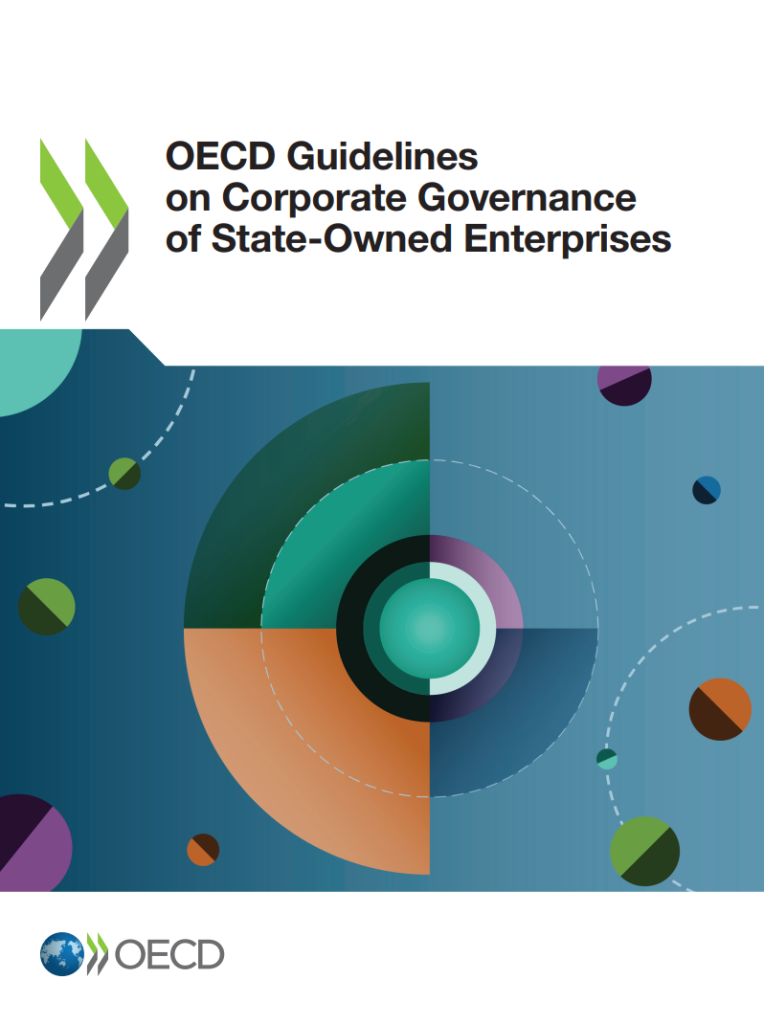
These are among the core issues addressed in the OECD Guidelines on Corporate Governance of State-Owned Enterprises 2024 (OECD SOEs Guidelines 2024). The Guidelines establish seven key chapters of principles:
- Chapter I: Rationales for State Ownership.
- Chapter II: The State’s Role as an Owner.
- Chapter III: State-Owned Enterprises in the Marketplace.
- Chapter IV: Equitable Treatment of Shareholders and Other Investors.
- Chapter V: Disclosure, Transparency and Accountability.
- Chapter VI: The Composition and Responsibilities of the Boards of State-Owned Enterprises.
- Chapter VII: State-Owned Enterprises and Sustainability.
In Vietnam, Law No. 68/2025/QH15 on the Management and Investment of State Capital in Enterprises, effective from August 1, 2025, together with its amendments, supplements, and implementing regulations, has contributed to strengthening the legal framework for managing and overseeing State capital.
Against this backdrop, what do the OECD Guidelines mean for improving the quality of corporate governance in Vietnamese SOEs?
From the rationale for State ownership to professional ownership practices
Reference: Chapters I and II – OECD SOEs Guidelines 2024
The first two chapters of the OECD SOEs Guidelines 2024 focus on the State’s responsibilities in defining the rationale for ownership and exercising ownership rights in enterprises.
Under Principles I.A–I.D, the State should clearly define the rationale for maintaining enterprise ownership, with the objective of maximizing long-term value for society in an efficient and sustainable manner. The government should establish a clear ownership policy specifying ownership objectives, the roles of the State and other shareholders, the mechanisms for exercising ownership rights, and the responsibilities of relevant authorities.
The ownership policy should be publicly disclosed, subject to appropriate oversight, and periodically reviewed by the government to evaluate its implementation. Furthermore, the State should determine and periodically review the rationale for owning each SOE. Any public policy objectives assigned to SOEs should be linked to their core business activities, formally approved, and publicly disclosed.
Building on this foundation, Chapter II emphasizes that the State should exercise its ownership rights in an active, informed, professional, and highly effective manner.
In particular, Principles II.B and II.C recommend that the State clearly define its expectations for SOEs, ensure their operational autonomy, and refrain from intervening in day-to-day management. The State should respect the independence and accountability of the Members’ Council or Board of Directors while maintaining appropriate communication mechanisms between the ownership entity and the enterprise’s highest governing body, typically represented by the Chair of the Board of Directors.
Relevance to Vietnam’s legal framework
Law No. 68/2025/QH15 contains several provisions aligned with these principles:
- Clause 1, Article 12: Specifies the circumstances under which the State may invest capital to establish enterprises wholly owned by the State, including the provision of essential public goods and services, national defense and security, natural monopolies, and other sectors as prescribed by law.
- Clause 2, Article 5: Stipulates that ownership representative agencies and State management authorities must not directly intervene in the production, business, or investment activities of enterprises, or in the management and administration carried out by direct State ownership representatives and other managerial positions in accordance with the company’s charter.
In addition, Decree No. 365/2025/ND-CP and Decree No. 366/2025/ND-CP further elaborate the legal framework governing the supervision, evaluation, public disclosure, management, and investment of State capital in enterprises. These regulations are consistent with the OECD’s approach to clarifying ownership objectives, delineating responsibilities, and safeguarding enterprise autonomy.
Professional State ownership is therefore not simply about establishing a legal framework. It also involves how the State defines expectations for individual enterprises, monitors performance, and enforces accountability rather than intervening extensively in operational management.
Ensuring a level playing field and transparency in public policy obligations
Reference: Chapter III – OECD SOEs Guidelines 2024
SOEs may simultaneously engage in commercial activities and fulfill public policy obligations. This creates a need to clearly distinguish the corresponding objectives, responsibilities, and resources.
Under Principle III.A, the State’s ownership function should be separated from its market regulation and policymaking functions.
Principles III.C–III.F further emphasize that:
- Public service obligations assigned to SOEs should be clearly defined and transparent in terms of scope, costs, and funding sources, while avoiding cross-subsidization of commercial activities.
- SOEs should not be used to create unfair competitive advantages. Support measures for achieving public policy objectives should be transparent and comply with applicable regulations.
- The State should ensure that SOEs comply with applicable laws and market mechanisms, maintaining a level playing field with private enterprises regarding taxation, debt, and regulatory treatment.
- SOEs’ economic activities should operate under market conditions, without financial privileges or preferential access to resources that create unfair competitive advantages, while generating appropriate rates of return.
For example, when an enterprise conducts commercial activities while also fulfilling assigned public service obligations, performance assessments should distinguish commercial results from the costs and funding associated with those obligations.
Without such separation, owners and stakeholders may find it difficult to accurately evaluate enterprise performance, while risks of resource misallocation may arise.
For SOEs, establishing mechanisms to separately identify, monitor, and report on public policy obligations is essential to improving transparency in resource allocation and evaluating the effectiveness of State capital utilization.
Protecting shareholder rights and improving disclosure quality
Reference: Chapters IV and V – OECD SOEs Guidelines 2024
For SOEs with non-State investors, the OECD SOEs Guidelines 2024 emphasize the importance of equitable treatment of all shareholders, including minority and foreign shareholders.
Under Principle IV.A, the State and SOEs should ensure equitable treatment of shareholders, provide transparent and timely disclosure, and facilitate shareholder participation and voting at General Meetings of Shareholders (GMS).
Transactions between the State and SOEs, or among SOEs, should be conducted on market terms. SOEs should also seek to apply the G20/OECD Principles of Corporate Governance in a manner appropriate to their ownership structures.
Case study – Binh Son Refining and Petrochemical Joint Stock Company (BSR): At its Annual General Meeting of Shareholders on April 23, 2025, BSR held its first fully online meeting, enabling shareholders to attend and vote electronically. The use of technology to facilitate shareholder participation and voting provides an example of practices aligned with the direction of Principle IV.A.4.
Beyond protecting shareholder rights, the OECD SOEs Guidelines 2024 also emphasize SOEs’ responsibilities for disclosure, transparency, and accountability.
Principle V.A recommends that SOEs disclose material information comprehensively, transparently, and in a timely manner in accordance with internationally recognized standards. Such information includes corporate objectives and performance, financial position, ownership and governance structures, executive remuneration, material risks, State financial assistance, related-party transactions, and sustainability-related information.
Case study – Vietnam Airlines Corporation – JSC (Vietnam Airlines): Vietnam Airlines’ 2025 Annual Report presents information on strategic direction, business performance, financial position, corporate governance, risk management, and sustainability. This illustrates the disclosure of multiple categories of material information, providing shareholders and other stakeholders with a basis for monitoring and evaluating enterprise performance.
From the OECD’s perspective, protecting shareholder rights and improving disclosure quality go beyond regulatory compliance. These practices also contribute to greater transparency, accountability, and investor confidence.
However, publicly disclosed activities reflect only specific aspects of corporate governance practices and are insufficient to establish full compliance with the OECD SOEs Guidelines 2024.
Strengthening the capacity and oversight effectiveness of Members’ Councils and Boards of Directors
Reference: Chapter VI – OECD SOEs Guidelines 2024

Under Principles VI.A and VI.B, Members’ Councils and Boards of Directors should have clearly defined mandates and authority, be accountable for enterprise performance, and fulfill their responsibilities for strategic direction and management oversight.
Board members should make informed decisions with due care, objectivity, and in the best interests of the enterprise. In addition, Principles VI.C–VI.E emphasize the selection of board members based on professional competencies, the preservation of independence, and the prevention of conflicts of interest.
Notably, Principle VI.H recommends considering the establishment of specialized board committees, with priority given to an Audit Committee to support oversight of financial reporting and disclosure, internal controls, and auditing. Depending on the enterprise’s size, structure, and risk profile, additional committees may be established for nomination, remuneration, risk management, or sustainability.
Case study – Vietnam Electricity (EVN): In 2026, EVN undertook a review and enhancement of its internal governance regulations, including provisions on the delegation and allocation of authority among the Members’ Council, the Board of Management, and representatives of EVN’s capital contributions in other enterprises.
The Chair of EVN’s Members’ Council also emphasized the need to clearly define the functions, authority, and responsibilities of each management level, linking delegation of authority with stronger inspection, oversight, and substantive performance evaluation.
These activities illustrate EVN’s efforts to strengthen the allocation of authority and oversight responsibilities within a State-owned enterprise, reflecting the direction of Principles VI.A and VI.B regarding the effectiveness of Members’ Councils and Boards of Directors.
Strengthening risk management, internal controls, and auditing
Reference: Chapter V and Principle VI.J – OECD SOEs Guidelines 2024
Another important aspect of the OECD SOEs Guidelines 2024 is the requirement to align risk management with the achievement of enterprise objectives.
Under Principle V.B, SOEs should establish risk management systems to identify, manage, control, and report material risks, integrating these systems with internal controls, ethics policies, and compliance programs. Principle VI.J further establishes the Board’s responsibility to oversee the risk management system and ensure that it is regularly assessed and adjusted.
In addition, Principles V.C and V.D emphasize the importance of a competent and independent internal audit function with appropriate reporting arrangements, alongside the conduct of external independent audits.
For SOEs in Vietnam, implementation should take into account the allocation of responsibilities among Supervisory Boards, Controllers, internal audit functions, and specialized committees under the Members’ Council or Board of Directors, where such committees exist.
From a practical perspective, the key question is not merely how many risks an enterprise has identified or how many audit recommendations it has issued. Rather, it is whether material issues are reported to the appropriate governance level, addressed promptly, and monitored through to resolution.
To achieve this, Members’ Councils and Boards of Directors should receive comprehensive information on material risks, their potential impacts, response measures, assigned responsibilities, and implementation outcomes.
This provides a foundation for shifting from procedural compliance-oriented controls toward risk-based oversight and actual performance evaluation.
Integrating sustainability into the strategy and corporate governance in State-Owned Enterprises
Reference: Chapter VII – OECD SOEs Guidelines 2024

One significant development in the OECD SOEs Guidelines 2024 is the introduction of a dedicated chapter on state-owned enterprises and sustainability.
Under Principle VII.A, when the State establishes sustainability objectives, these should be integrated into its ownership policies and practices, appropriately communicated, and subject to periodic monitoring and evaluation.
At the enterprise level, Principle VII.B emphasizes the responsibilities of Members’ Councils and Boards of Directors to consider sustainability-related risks and opportunities, guide the establishment of material objectives, integrate these considerations into enterprise risk management systems, and oversee and evaluate management performance.
Case Study – PVCFC: Integrating ESG into strategy and corporate governance
Petrovietnam Ca Mau Fertilizer Joint Stock Company (PVCFC) provides an example of the progressive integration of sustainability into corporate governance systems.
On February 29, 2024, PVCFC’s Board of Directors issued Decision No. 427/QD-PVCFC establishing an ESG Committee under the Board, with responsibilities for advising, consulting, and overseeing matters relating to sustainability and corporate governance.
Subsequently, on June 10, 2024, the Board approved PVCFC’s ESG and Sustainability Strategic Orientation under Decision No. 1696/QD-PVCFC, aligning environmental, social, and governance priorities with the corporation’s development strategy.
According to its 2025 Sustainability Report, PVCFC continued integrating ESG risks into its Enterprise Risk Management (ERM) framework while strengthening oversight mechanisms through the Board of Directors, the ESG Committee, and the Audit and Risk Management Committee.
In particular, PVCFC disclosed activities involving the review of material ESG risks, the establishment of key risk indicators, and updates to its Risk Management Regulations to incorporate sustainability objectives.
These disclosures demonstrate connections among strategic direction, Board oversight mechanisms, and ESG risk management, reflecting an approach consistent with Chapter VII of the OECD SOEs Guidelines 2024.
However, integrating sustainability requires more than establishing organizational structures and strategic objectives. These objectives should be translated into action plans, measurable indicators, and performance monitoring mechanisms to enable assessments of actual effectiveness.
Sustainability should therefore not be treated merely as a component of ESG reporting. Instead, it should become an integral part of corporate strategy, risk management, and accountability.
From the OECD SOEs Guidelines 2024 to improving practices in corporate governance in State-Owned Enterprises
The OECD SOEs Guidelines 2024 do not prescribe a single governance model for all SOEs. Their application should take into account each enterprise’s legal form, ownership structure, size, industry, and assigned responsibilities. Furthermore, the Guidelines constitute international recommendations and do not replace applicable legal requirements in Vietnam.
The seven chapters of the OECD SOEs Guidelines 2024 provide a comprehensive reference framework, extending from the State ownership level to enterprise governance and internal oversight systems.
At the State level, key priorities include clarifying the rationale for ownership, professionalizing the exercise of ownership rights, and ensuring accountability.
At the enterprise level, improvement priorities may focus on:
- Strengthening governance mechanisms: Reviewing corporate charters, internal governance regulations, and the allocation of authority and responsibilities across governance levels.
- Enhancing the effectiveness of Members’ Councils and Boards of Directors: Strengthening professional competencies, information quality, constructive challenge mechanisms, and performance evaluation.
- Reinforcing risk management and internal controls: Ensuring that material risks are appropriately monitored, addressed, and followed up.
- Promoting transparency and sustainability: Improving disclosure quality and integrating material ESG considerations into corporate strategy and governance.
A common theme across these priorities is the transition from developing isolated rules and procedures toward building an integrated governance system that connects objectives, authority, responsibilities, oversight, and outcomes.
Effective corporate governance in SOEs is not simply about having comprehensive regulations or following established procedures. It requires alignment between how the State exercises its ownership rights and how enterprises organize and operate their governance systems.
This alignment also provides a foundation for improving the efficiency of State capital utilization, strengthening competitiveness, and creating long-term value.
Key references:
- OECD (2024). OECD Guidelines on Corporate Governance of State-Owned Enterprises 2024. OECD Publishing, Paris.
- National Assembly of Vietnam (2025). Law No. 68/2025/QH15 on the Management and Investment of State Capital in Enterprises, enacted on June 14, 2025. See also Consolidated Document No. 60/VBHN-VPQH dated March 23, 2026.
- Government of Vietnam (2025). Decree No. 365/2025/ND-CP on supervision, inspection, evaluation, classification, reporting, and public disclosure in the management and investment of State capital in enterprises; Decree No. 366/2025/ND-CP on the management and investment of State capital in enterprises.
- BSR (April 23, 2025). BSR Holds Its 2025 Annual General Meeting of Shareholders. Binh Son Refining and Petrochemical Joint Stock Company.
- Vietnam Airlines (2026). Annual Report 2025. Vietnam Airlines Corporation – JSC.
- EVN (January 26, 2026). EVN’s Enterprise Innovation and Development Committee Holds Its First Meeting of 2026. Vietnam Electricity.
- EVN (April 15, 2026). EVN Disseminates Seven Newly Issued Internal Regulations to Employees. Vietnam Electricity.
- PVCFC (2025). Annual Report 2024 – Structure and Operations of the Board of Directors. Petrovietnam Ca Mau Fertilizer Joint Stock Company.
- PVCFC (2026). Sustainability Report 2025 – Foundation for Sustainable Corporate Governance. Petrovietnam Ca Mau Fertilizer Joint Stock Company.
Disclaimer: The corporate examples presented in this article are intended solely to illustrate publicly disclosed activities and information. They do not constitute an assessment of or conclusion regarding the enterprises’ compliance with the OECD SOEs Guidelines 2024 or the effectiveness of their corporate governance practices.
About CGS Vietnam
CGS Vietnam Consulting Joint Stock Company provides specialized advisory services in Corporate Governance, Sustainability (ESG), Risk Management, and Internal Audit. Backed by a team of experienced professionals with deep expertise in international best practices, CGS Vietnam partners with businesses to strengthen corporate governance, enhance management capabilities, meet investor expectations, and achieve long-term sustainable growth.
Contact CGS Vietnam:
Hotline: (+84) 363 581 520 | Email: [email protected] | Website: https://cgsvietnam.com/
LinkedIn: https://www.linkedin.com/company/cgs-vietnam | Facebook: https://www.facebook.com/CGSVietnamCompany/