

The 17 Sustainable Development Goals (SDGs) of the United Nations serve as an important reference framework for countries, organizations, and businesses. For businesses, the SDGs help identify priorities, align ESG strategies, and measure performance.
So, how should businesses understand and apply the SDGs?
What are the 17 Sustainable Development Goals (SDGs)?
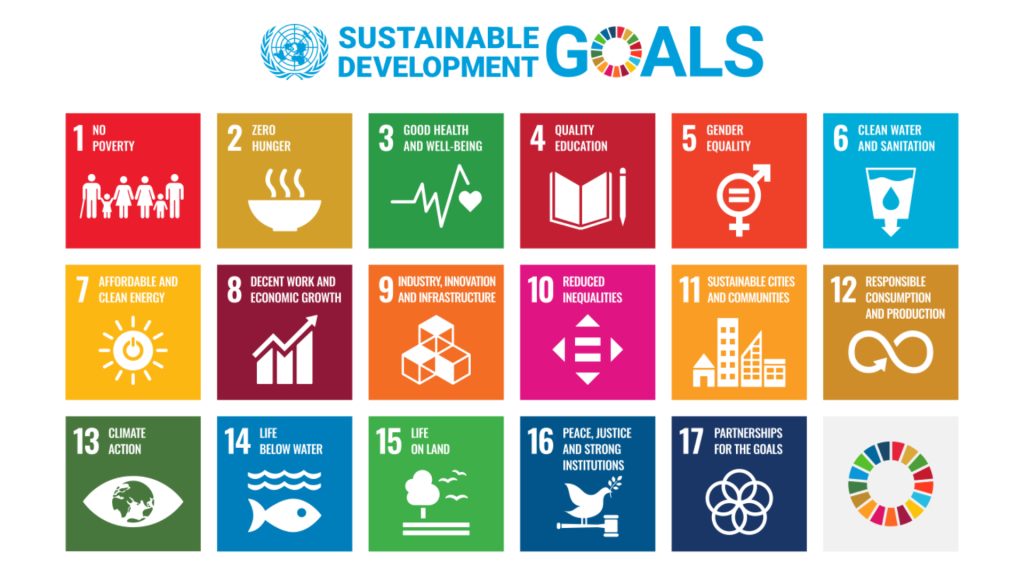
The 17 Sustainable Development Goals (SDGs) were adopted by United Nations Member States in September 2015 as part of the 2030 Agenda for Sustainable Development.
The SDG framework comprises 17 Goals, 169 Targets, and 234 unique Indicators, providing a framework for monitoring and assessing progress toward sustainable development at the global level.
Specifically:
- 17 Goals: Define global sustainable development priorities across three dimensions: economic, social, and environmental.
- 169 Targets: Specify the intended outcomes to be achieved under each Sustainable Development Goal.
- 234 Indicators: Provide a statistical basis for monitoring and assessing progress toward the Targets. The total number of indicator entries is 251, as some Indicators are used for multiple Targets.
The 17 SDGs were established in response to the need to address interconnected global challenges, including poverty, inequality, climate change, and environmental degradation. Rather than addressing these challenges in isolation, the SDGs provide a unified framework that connects the economic, social, and environmental dimensions of sustainable development.
This framework enables countries, organizations, and businesses to identify shared priorities, coordinate actions, and monitor progress toward sustainable development by 2030.
| Note: These Indicators form part of the global SDG statistical framework and do not represent 234 mandatory KPIs for individual businesses. When integrating the SDGs into their ESG strategies, businesses should develop performance indicators that align with their operations and management objectives. |
List of the 17 Sustainable Development Goals of the United Nations
| SDG | Goal |
|---|---|
| SDG 1 | No Poverty |
| SDG 2 | Zero Hunger |
| SDG 3 | Good Health and Well-being |
| SDG 4 | Quality Education |
| SDG 5 | Gender Equality |
| SDG 6 | Clean Water and Sanitation |
| SDG 7 | Affordable and Clean Energy |
| SDG 8 | Decent Work and Economic Growth |
| SDG 9 | Industry, Innovation and Infrastructure |
| SDG 10 | Reduced Inequalities |
| SDG 11 | Sustainable Cities and Communities |
| SDG 12 | Responsible Consumption and Production |
| SDG 13 | Climate Action |
| SDG 14 | Life Below Water |
| SDG 15 | Life on Land |
| SDG 16 | Peace, Justice and Strong Institutions |
| SDG 17 | Partnerships for the Goals |
Global progress toward the SDGs as of 2026
According to the United Nations’ The Sustainable Development Goals Report 2026, among the 39 Targets with sufficient data to assess progress:
- Only 36% are on track or showing moderate progress.
- 49% are progressing too slowly.
- 15% have regressed compared with the 2015 baseline.
These findings indicate that, despite progress in areas such as healthcare, clean water, energy, and digital connectivity, the world still needs to accelerate action to achieve the SDGs by 2030.
In this context, businesses can contribute through responsible business practices, technological innovation, investment, and collaboration with stakeholders.
Why should businesses care about the 17 Sustainable Development Goals?
Climate change, resource scarcity, and labor conditions can directly affect business costs, supply chains, and operational capabilities. While aligning with the SDGs does not guarantee business success, it can help businesses identify long-term issues to incorporate into their strategies.
Four key benefits include:
- Identifying and managing risks: The SDGs help businesses identify environmental and social risks. For example, SDG 6 highlights potential water scarcity risks for businesses with high water consumption.
- Identifying business opportunities and driving innovation: The energy transition and the efficient use of resources create demand for new technologies and products. The SDGs help businesses identify opportunities for innovation.
- Meeting stakeholder expectations: Aligning with the SDGs helps businesses communicate their priorities, ESG performance, and impacts to investors, customers, and business partners.
- Aligning business strategies with shared goals: The SDGs help connect ESG objectives with national and global development priorities while encouraging collaboration.
The value of the SDGs lies in meaningful action, not in the number of SDG icons displayed in a report.
The relationship between SDGs, ESG, and sustainability strategy
Both the SDGs and ESG relate to sustainable development, but they differ in their nature and intended purposes.
The SDGs represent a set of global sustainable development goals, while ESG (Environmental, Social and Governance) is an approach to addressing environmental, social, and governance issues within business operations.
The distinctions can be summarized as follows:
| Concept | Role |
|---|---|
| SDGs | Global sustainable development goals to be achieved by 2030. |
| ESG | An approach to addressing environmental (E), social (S), and governance (G) issues in business operations. |
| Sustainability Strategy | Defines priorities, objectives, resources, and action plans. |
| GRI Standards, IFRS S1/S2 | Sustainability disclosure standards with different objectives and scopes. |
Importantly, the SDGs are not ESG reporting standards. They do not prescribe a mandatory sustainability reporting structure that applies uniformly to all businesses. Instead, businesses can use the SDGs as a reference framework to identify how their ESG activities contribute to broader sustainable development objectives.
For example, a manufacturing company implementing an energy efficiency program may:
- Align the initiative with the environmental (E) dimension of ESG.
- Set a target to reduce energy consumption intensity.
- Link the program to SDG Target 7.3 on improving energy efficiency.
- Disclose energy consumption performance in accordance with relevant reporting standards.
Thus, the SDGs help businesses understand the significance of their ESG activities within the broader context of global sustainable development, while ESG management and reporting frameworks support implementation, performance monitoring, and disclosure.
Do businesses need to address all 17 SDGs?

Businesses are not required to implement separate action programs for all 17 Sustainable Development Goals. The SDGs were established at the global and national levels, whereas individual businesses differ in their industries, business models, resources, and levels of impact.
Therefore, rather than selecting as many SDGs as possible, businesses should identify those that are significantly relevant to their business models, operations, and value chains.
Identifying relevant SDGs based on industry characteristics and value chains
The selection of SDGs should be based on the specific characteristics of each business rather than applying a fixed list of goals to particular industries.
Several principles should be considered:
- Industry characteristics and business model: Identify sustainability issues directly related to the company’s operations, products, services, and strategic direction.
- Impacts across the value chain: Consider environmental and social impacts arising from direct operations and throughout the value chain, from raw material sourcing and production to distribution, product use, and end-of-life treatment.
- Scale and nature of impacts: Assess the significant positive and negative impacts of business activities on the environment, people, and the economy.
- Capacity to contribute and implement: Prioritize goals to which the business can make meaningful contributions through its operations, resources, and management capabilities.
Applying these principles enables businesses to select SDGs on a sound basis, reflecting their specific business characteristics and actual impacts.
Selecting SDGs based on Material Topics
One well-founded approach is to integrate SDG selection with a Materiality Assessment. Through this process, businesses can identify sustainability matters that have significant impacts on the environment, people, and the economy, while also considering risks and opportunities that may affect their financial prospects.
Based on the identified material topics, businesses can map them against the relevant SDGs and Targets to determine appropriate priorities. Importantly, SDG selection should reflect both positive and negative impacts.
A business may generate economic and social value while simultaneously causing adverse impacts on the environment or communities.
The selection and disclosure of priority SDGs should therefore reflect both the business’s positive contributions and significant negative impacts, ensuring objectivity, balance, and transparency.
How can businesses integrate SDGs into their operations?
To translate the SDGs from global goals into concrete actions, businesses can refer to The SDG Compass, developed by the United Nations Global Compact, the Global Reporting Initiative (GRI), and the World Business Council for Sustainable Development (WBCSD).
The SDG Compass outlines a five-step process: understanding the SDGs, defining priorities, setting goals, integrating sustainability into business operations, and reporting results.
Step 1. Understand the SDGs
Businesses should familiarize themselves with the content and significance of the 17 SDGs and their respective Targets to understand the relationship between sustainable development and business operations, as well as the associated opportunities and responsibilities.
Step 2. Define priority SDGs
Review positive and negative impacts across operations and the value chain, and incorporate materiality assessment findings to identify relevant SDGs where the business has significant impacts and the potential to make meaningful contributions.
Step 3. Set goals and key performance indicators (KPIs)
Translate priority SDGs into specific, measurable, and monitorable objectives. Businesses should establish appropriate KPIs, baseline years, implementation timelines, and expected outcomes.
Step 4. Integrate SDGs into business strategy and operations
Embed priority objectives into business strategies, operational plans, action programs, and resource allocation, while assigning responsibilities for implementation, oversight, and performance evaluation.
Step 5. Report and communicate results
Monitor, evaluate, and disclose progress toward established objectives. Disclosures should be transparent, verifiable, and reflect both achievements and limitations encountered during implementation.
Measuring and disclosing business contributions to the SDGs
Linking business activities to the SDGs should go beyond selecting goals and displaying their icons in reports. Such links should be supported by performance indicators, actual results, and verifiable information.
To assess contributions to the SDGs, businesses should distinguish between activities undertaken and outcomes achieved, while selecting indicators that appropriately reflect the relevant impacts.
Linking SDGs with relevant KPIs
Businesses can develop KPIs based on their priority SDGs, material topics, and specific business characteristics.
Examples of KPIs include:
| Relevant SDGs | Area of Alignment | Illustrative Business-level KPIs |
|---|---|---|
| SDG 6.4 | Improving water use efficiency | Water use intensity per unit of product |
| SDG 7.3 | Improving energy efficiency | Energy consumption intensity per unit of product |
| SDG 8.8 | Ensuring occupational health and safety | Rate of recordable work-related injuries; number of fatalities resulting from occupational accidents |
| SDG 12.5 | Reducing waste generation and promoting recycling | Total waste generated; amount and percentage of waste recycled |
| SDG 13 | Managing and reducing greenhouse gas emissions | Total greenhouse gas emissions (tCO₂e); GHG emissions intensity |
Note: These are illustrative KPIs at the business level, not the official United Nations SDG Indicators. Businesses should determine appropriate reporting boundaries, calculation methodologies, and units of measurement when applying these KPIs.
Disclosing commitments, progress, and results
To ensure transparency, businesses should disclose:
- Objectives and scope: Priority SDGs/Targets and the rationale for their selection.
- Action plans: Activities, solutions, and resources allocated to implementation.
- Performance indicators: KPIs, measurement methodologies, baseline years, and targets.
- Performance results: Progress toward targets, significant outcomes and impacts, including any remaining limitations.
Businesses can refer to the GRI Standards, as well as Integrating SDGs into Sustainability Reporting and Linking the SDGs and the GRI Standards, to select appropriate disclosure indicators and link ESG information to the corresponding SDGs.
Disclosure of ESG KPIs does not automatically demonstrate that a business has made a positive contribution to the SDGs. Claims regarding SDG contributions should have a clear basis, reflect actual results, and be supported by verifiable information.
Conclusion: From SDGs prioritization to sustainable business practices
The 17 Sustainable Development Goals of the United Nations provide a common direction for countries, organizations, and businesses to work toward sustainable development.
For businesses, the value of the SDGs does not lie in the number of goals selected or the icons displayed in reports, but in their ability to translate relevant goals into concrete actions and measurable results.
Effective SDG integration begins with understanding business impacts, identifying material topics, setting appropriate objectives, and aligning ESG initiatives with business strategy.
———————-
References:
- United Nations (2015). Transforming our world: The 2030 Agenda for Sustainable Development – A/RES/70/1.
- United Nations (2026). The Sustainable Development Goals Report 2026.
- UN Global Compact, GRI & WBCSD (2015). SDG Compass: The Guide for Business Action on the SDGs.
- Global Reporting Initiative (GRI). Integrating SDGs into Sustainability Reporting.
- Global Reporting Initiative (GRI). Linking the SDGs and the GRI Standards.
About CGS Vietnam
CGS Vietnam Consulting Joint Stock Company provides specialized advisory services in Corporate Governance, Sustainability (ESG), Risk Management, and Internal Audit. Backed by a team of experienced professionals with deep expertise in international best practices, CGS Vietnam partners with businesses to strengthen corporate governance, enhance management capabilities, meet investor expectations, and achieve long-term sustainable growth.
Contact CGS Vietnam:
Hotline: (+84) 363 581 520 | Email: [email protected] | Website: https://cgsvietnam.com/
LinkedIn: https://www.linkedin.com/company/cgs-vietnam | Facebook: https://www.facebook.com/CGSVietnamCompany/