

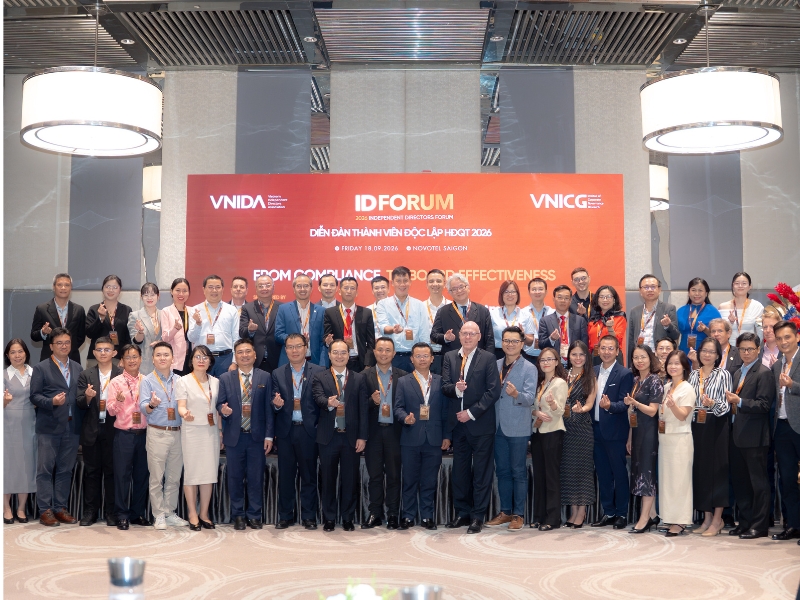
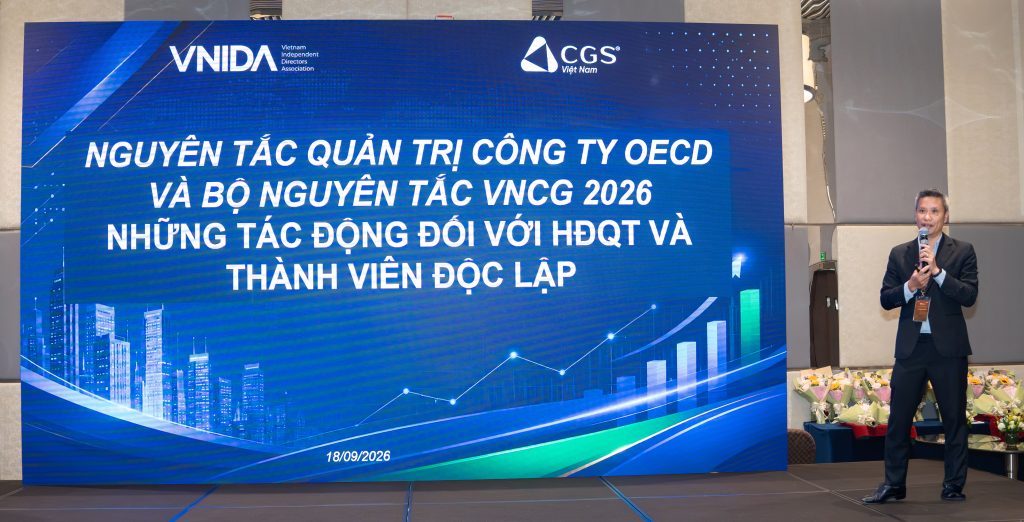
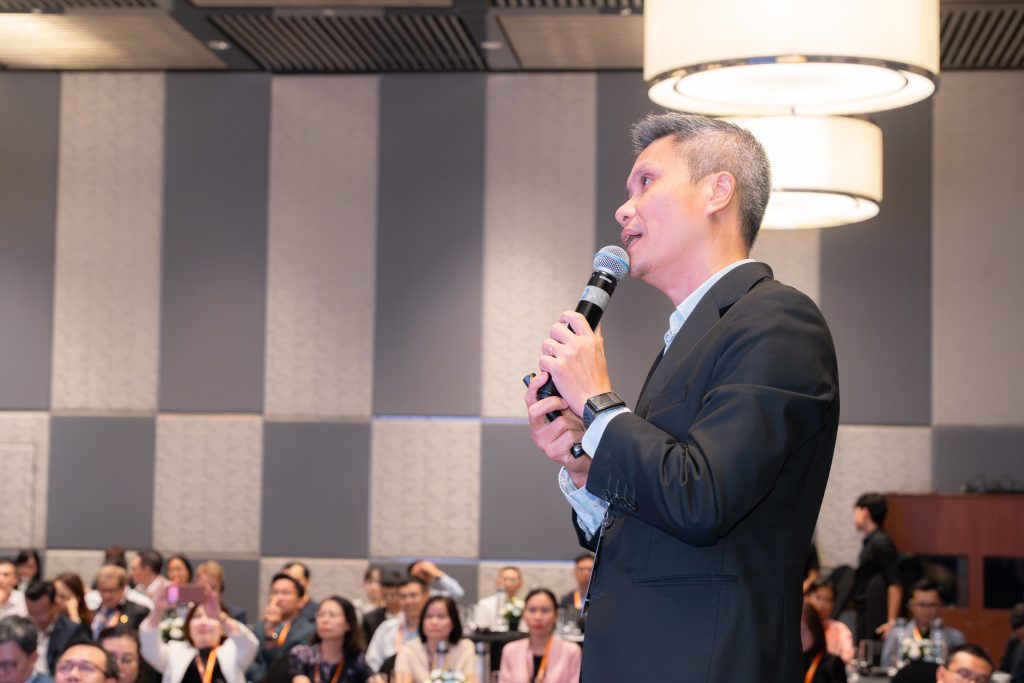
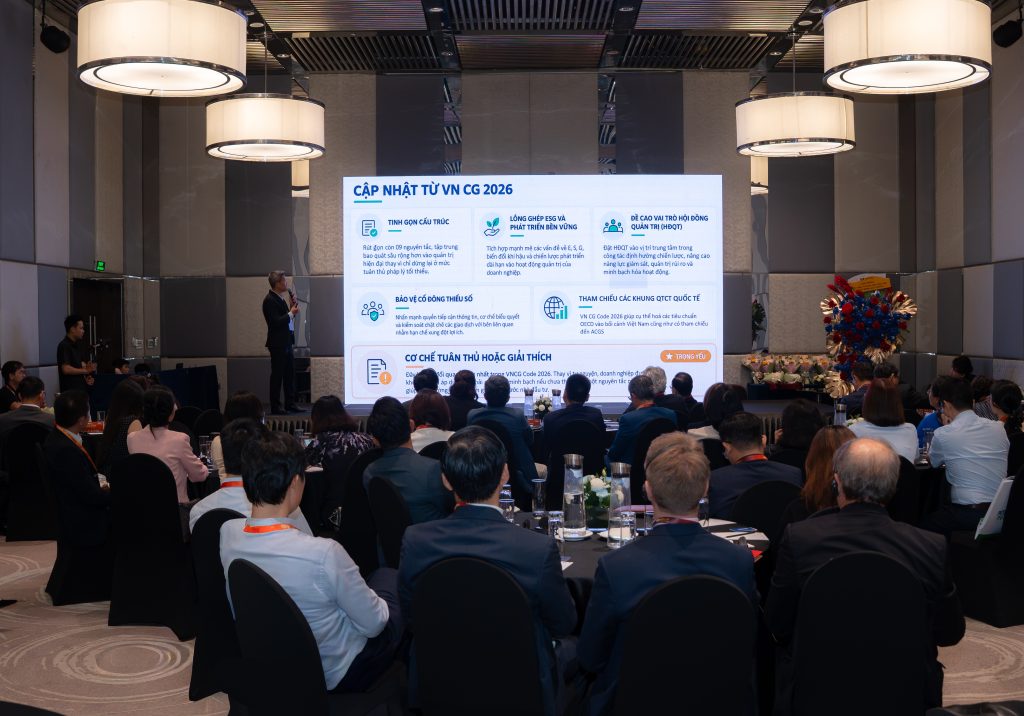
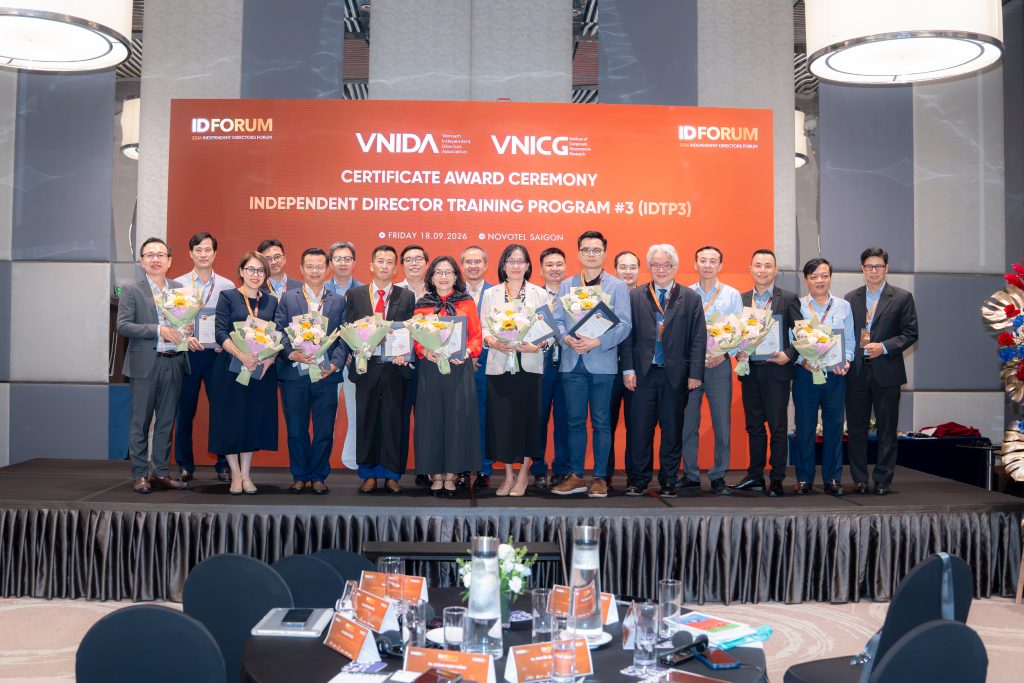
On 18 September 2026, at the Independent Director Forum 2026 organized by the Vietnam Independent Directors Association (VNIDA), Mr. Nguyen Viet Thinh – Chief Executive Officer of CGS Vietnam delivered a presentation entitled “OECD Corporate Governance Principles and the VNCG Code 2026: Implications for Boards and Independent Directors.”
As the business environment becomes increasingly complex and expectations from shareholders and other stakeholders continue to rise, Corporate Governance is gradually shifting from a predominantly structural compliance-based approach toward higher expectations regarding the quality of decision-making, oversight effectiveness, accountability, and long-term value creation.
Against this backdrop, Mr. Nguyen Viet Thinh’s presentation focused on four key areas:
- The evolving Corporate Governance landscape;
- Key updates from the OECD and the VNCG Code 2026;
- Emerging expectations regarding the independence of Board members;
- Direct implications for the roles and responsibilities of Independent Directors.
From Governance Standards to Quality in Practice
One of the key points emphasized in the presentation was the relationship between international governance standards and governance practices in Vietnam.
The G20/OECD Principles of Corporate Governance serve as an international reference framework and provide broad policy direction, while the VNCG Code 2026 translates these principles into the context of the Vietnamese market and its enterprises. The new Code also encourages companies to move beyond minimum compliance requirements and progressively strengthen the substance and quality of their governance practices.
One notable development discussed was the “comply or explain” approach. Under this approach, when a recommended governance practice has not been adopted, companies are expected not only to disclose non-compliance, but also to explain the reasons and indicate a roadmap for improvement. This approach helps strengthen Board accountability and improve transparency for investors.
At the same time, issues such as sustainability, emerging risks, cybersecurity, artificial intelligence, the effectiveness of Board committees, and remuneration transparency are increasingly becoming part of the Board’s oversight responsibilities.
Independent Directors need “Substantive Independence”, not merely formal compliance
Another major focus of the CEO of CGS Vietnam’s presentation was the evolving expectations placed on Independent Directors.
As the scope of Board responsibilities expands, Independent Directors are expected not only to satisfy formal independence criteria, but also to possess the capabilities required to oversee increasingly complex matters such as AI and digital transformation, climate and ESG, cybersecurity, data, and developments in the international business environment.
The presentation also highlighted the importance of continuous professional development and the use of independent experts in areas that fall outside the expertise of individual Board members.
These developments raise the expectations placed on both the competency profiles of Independent Directors and the way they perform their roles. According to the presentation, the evolving governance landscape may result in a greater workload, increased legal responsibilities, and higher transparency expectations for Independent Directors. It also requires each Independent Director to proactively reassess their independence, continuously strengthen their capabilities, and prepare more effectively for their oversight responsibilities.
What should Independent Directors prepare for?
In light of these changes, Mr. Nguyen Viet Thinh highlighted five key areas of action for Independent Directors:
- Continuously strengthen capabilities, particularly in AI, ESG, climate, data, cybersecurity, and geopolitics;
- Use AI responsibly, leveraging technology to support analysis while maintaining critical thinking and independent verification;
- Proactively access information, requesting complete data, cross-checking multiple sources, and using independent experts where necessary;
- Enhance the quality of challenge, testing assumptions, requesting evidence, and considering different scenarios before forming a view;
- Use appropriate protection mechanisms, including legal advice, independent experts, and Board liability insurance tools such as D&O insurance.
At the Board level, the presentation also emphasized the need to strengthen the Board’s role in strategic direction, oversight of material risks, safeguarding the integrity of the reporting system, supervising internal control and risk management, evaluating management performance, protecting the legitimate rights of shareholders, and maintaining dialogue with stakeholders.
The overarching message can be summarized through the following action chain:
Direction – Oversight – Challenge – Accountability
At the same time, governance quality does not depend solely on whether a company has the “right” Board structure on paper. It also depends significantly on how the Board operates in practice, including the quality of Board materials and information provided, training and continuous development programs, periodic evaluations of the Board and its committees, and mechanisms for monitoring the implementation of Board resolutions and recommendations arising from oversight activities.
From “Compliance” to “Substance”
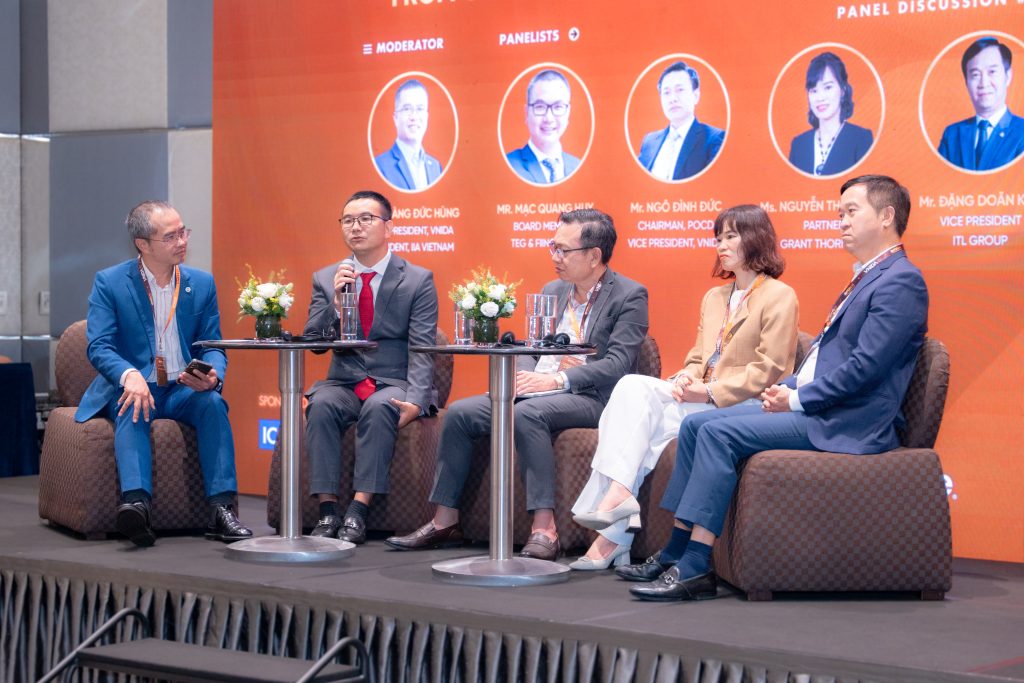
The discussion at the Independent Director Forum 2026 reflected a broader and increasingly visible trend in Corporate Governance: the roles of Boards and Independent Directors are being assessed more deeply, with greater emphasis on their ability to contribute to substantive governance quality rather than merely satisfy structural or formal requirements.
As governance standards continue to evolve and new risks emerge at an accelerating pace, expectations for Independent Directors are also shifting from simply “meeting independence criteria” toward maintaining independent judgment, challenging management on an informed basis, exercising effective oversight, and contributing meaningfully to the quality of Board decision-making.
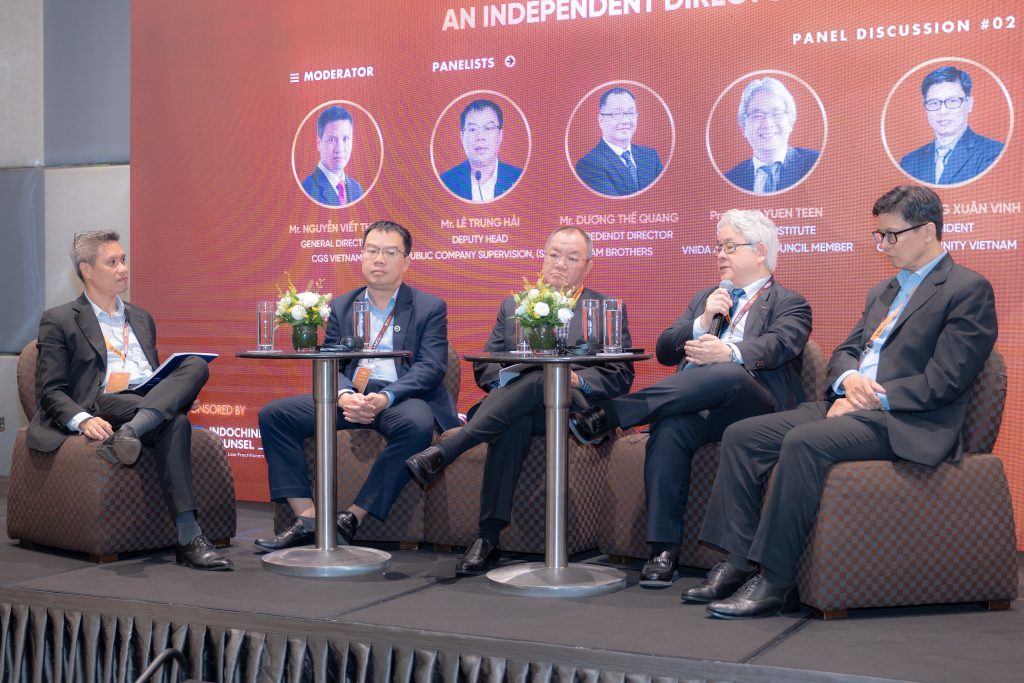
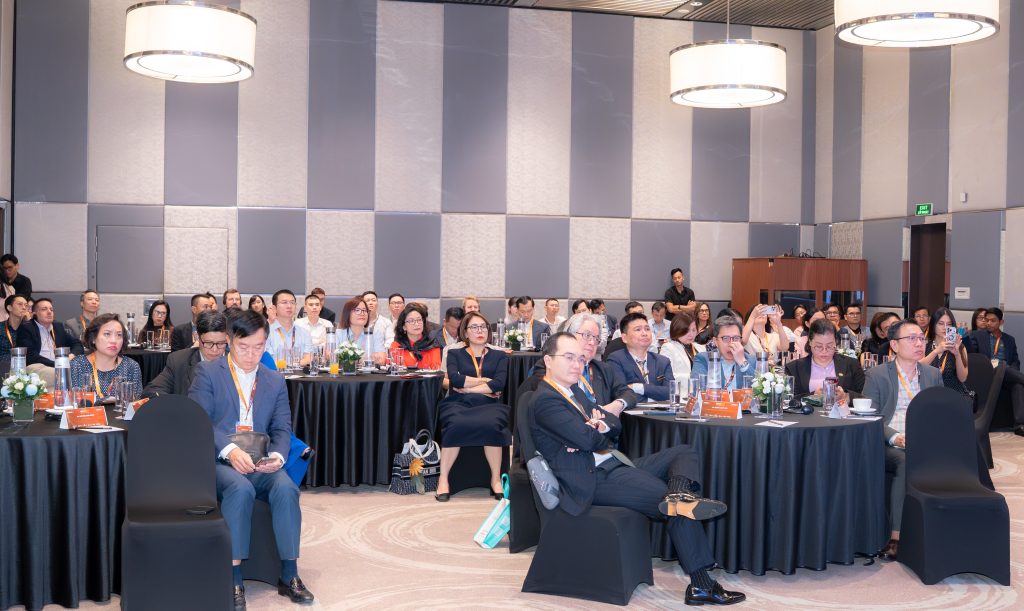
This was also one of the central themes discussed at the Independent Director Forum 2026, where Board members, business leaders, and governance professionals exchanged views on how to move governance principles from “compliance” to “substance”, thereby strengthening Board effectiveness and the long-term governance capabilities of enterprises.
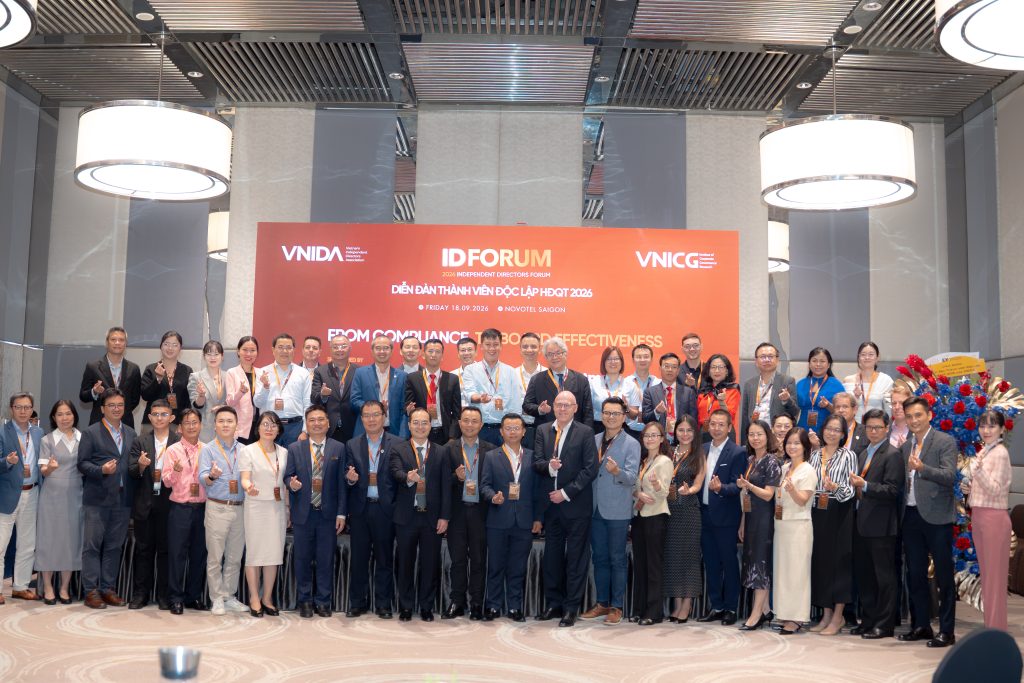
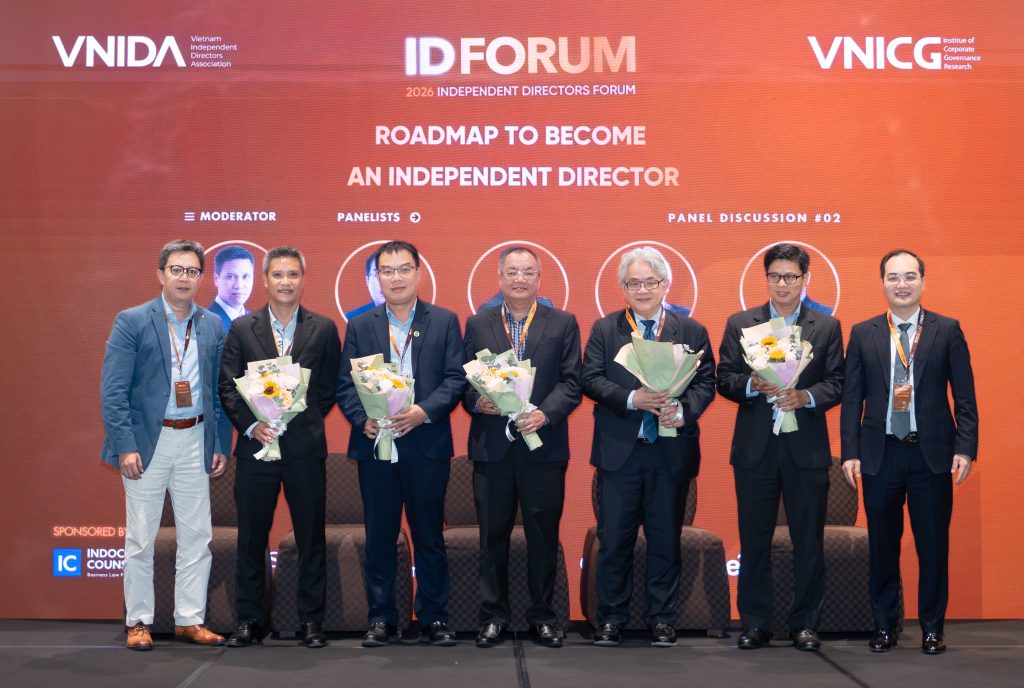
Some other images at the event:
 |  |
 |  |
 |  |
 |  |
About CGS Vietnam
CGS Vietnam Consulting Joint Stock Company provides specialized advisory services in Corporate Governance, Sustainability (ESG), Risk Management, and Internal Audit. Backed by a team of experienced professionals with deep expertise in international best practices, CGS Vietnam partners with businesses to strengthen corporate governance, enhance management capabilities, meet investor expectations, and achieve long-term sustainable growth.
Contact CGS Vietnam:
Hotline: (+84) 363 581 520 | Email: [email protected] | Website: https://cgsvietnam.com/
LinkedIn: https://www.linkedin.com/company/cgs-vietnam | Facebook: https://www.facebook.com/CGSVietnamCompany/