

ESG is increasingly becoming part of corporate strategy, annual reports, sustainability reports, and investor requirements. However, for many companies, the challenge is no longer simply understanding the three pillars of Environmental, Social, and Governance. The more practical question is: What should be measured, and how should it be measured?
Many companies collect extensive data on electricity, water, employees, occupational safety, and community activities, yet still struggle to determine which ESG metrics truly matter. Conversely, some companies disclose only their most notable initiatives without providing sufficient data to assess performance and trends.
Therefore, developing a set of ESG metrics is not simply about compiling a list of data points for reporting purposes. ESG metrics should help companies identify impacts, manage risks, track progress against targets, and provide reliable information to the Board of Directors (Board), investors, and other stakeholders.
What are ESG metrics?
ESG metrics are measures used by companies to track impacts, risks, opportunities, and performance across three key areas:
- Environmental (E): greenhouse gas emissions, energy, water, materials, waste, pollution, and biodiversity.
- Social (S): workforce, occupational health and safety, equality, human rights, customers, communities, and supply chains.
- Governance (G): Board structure and practices, business ethics, risk management, internal controls, anti-corruption, shareholder rights, and transparency.
ESG metrics are often expressed through quantitative data, such as total emissions, occupational injury rates, or the percentage of independent directors on the Board. In some cases, companies may supplement these metrics with qualitative information on policies, processes, and governance mechanisms to provide a more complete explanation of performance.
ESG metrics may reflect inputs, activities, outputs, or outcomes. For example, a training budget is an input metric; training hours represent an activity metric; the number of employees completing a training programme is an output metric; while improvements in employee competencies or changes in turnover rates may reflect outcomes.
ESG metrics vs. ESG ratings
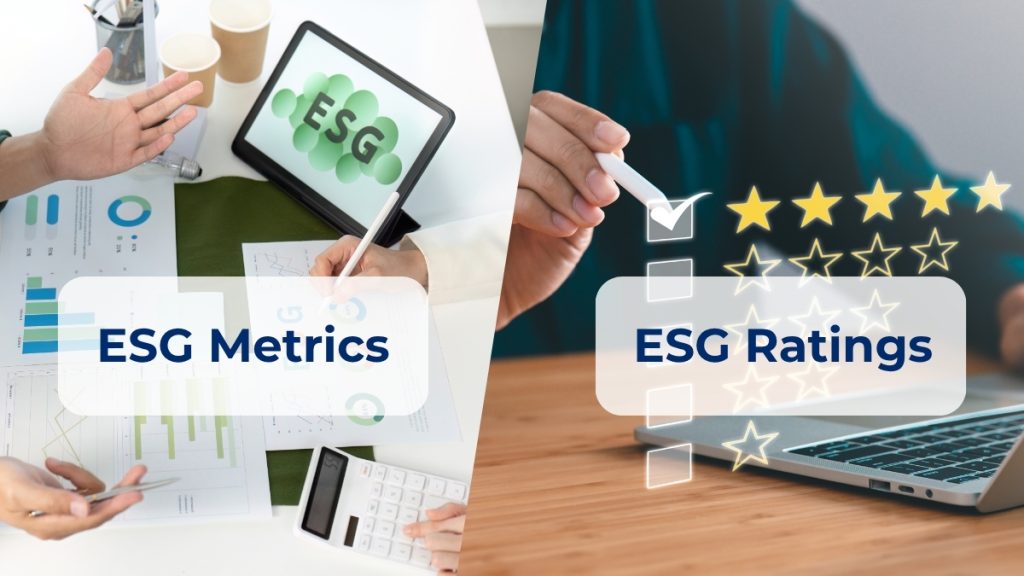
ESG metrics are specific data points tracked by a company, such as total greenhouse gas emissions or the percentage of independent directors on the Board. ESG ratings, by contrast, are typically composite assessments developed by rating providers using their own methodologies. As a result, the same company may receive different ESG ratings from different providers due to differences in assessment criteria, weightings, data sources, and scoring methodologies.
Why should companies track ESG metrics?
Supporting decision-making
ESG becomes a meaningful management tool when it is translated into measurable and trackable data. For example, energy consumption per unit of product can help a company assess operational efficiency and identify opportunities for cost savings. Employee turnover, workplace accidents, or ethical misconduct incidents may serve as early warning signals of workforce, operational, and reputational risks.
ESG metrics therefore serve not only reporting purposes but also support the Board and management in planning, resource allocation, and strategic oversight.
Meeting disclosure requirements
For public companies in Vietnam, the annual report template prescribed under Circular No. 96/2020/TT-BTC includes environmental and social information such as energy and water consumption, compliance with environmental regulations, employee policies, and responsibilities toward local communities.
Companies participating in international supply chains may also be required to provide ESG data at the request of customers, investors, lenders, or parent companies. When selecting ESG metrics, companies should therefore consider both regulatory requirements and stakeholder expectations.
Tracking ESG targets
A commitment such as “reducing emissions” is difficult to verify without clearly defined metrics, a baseline, targets, and a timeframe. ESG metrics translate broad commitments into manageable objectives—for example, reducing emissions intensity per tonne of product by 15% by 2030 compared with a 2025 baseline.
Enhancing transparency
Clearly defined calculation formulas, boundaries, and methodologies enable companies to compare performance across reporting periods or against industry peers. Reliable ESG data also provides a foundation for establishing internal controls and, over time, obtaining independent assurance over sustainability information.
Further reading: Financial and sustainability information: Why companies need to connect these two data streams?
Common ESG metrics tracked by companies
There is no single set of ESG metrics that is appropriate for every company. However, companies may refer to the following commonly used categories. Please note that the metrics presented below are illustrative and for reference purposes only; they do not constitute a comprehensive or mandatory list.
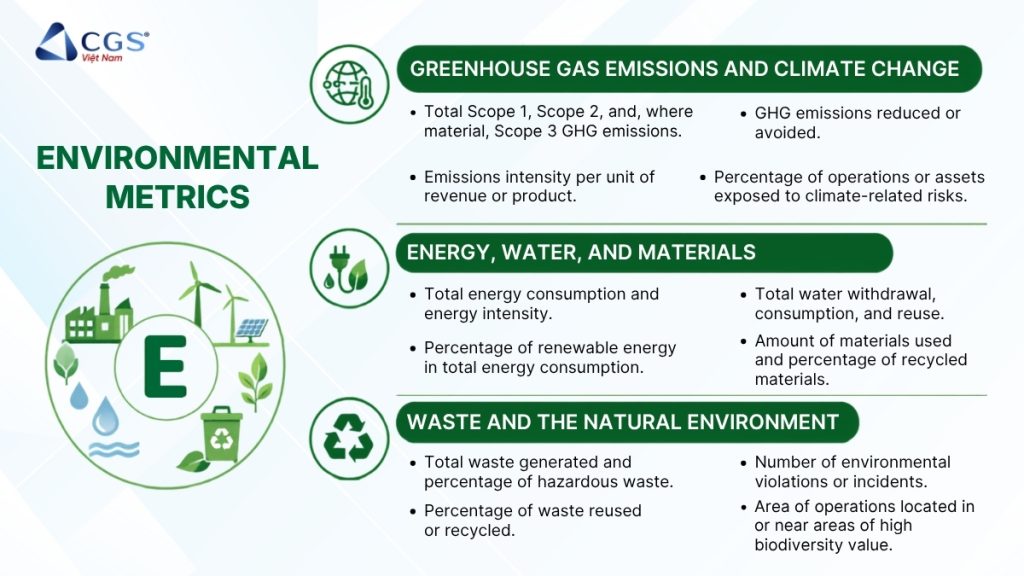
Environmental metrics (E)
Common environmental metrics include:
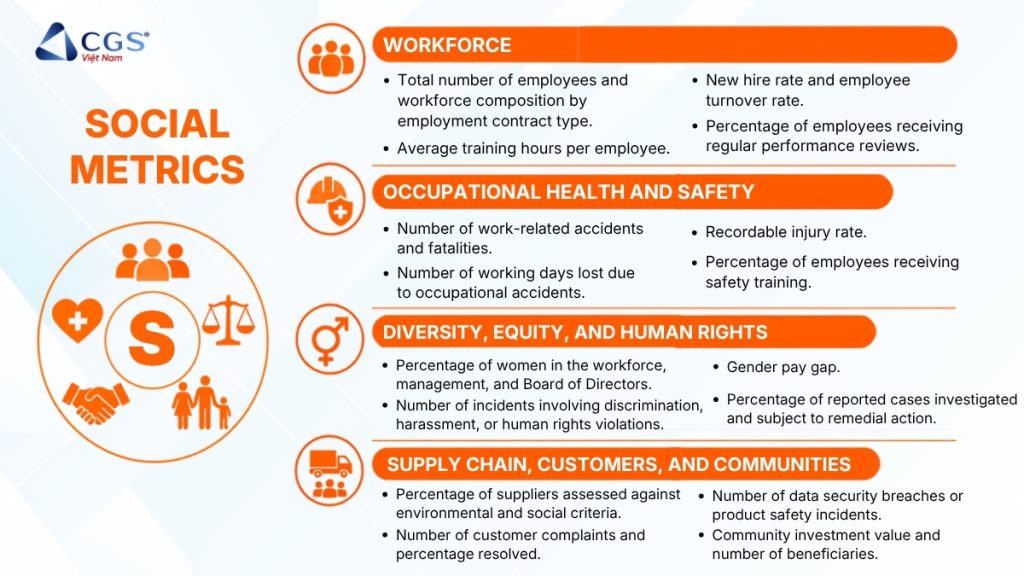
Social metrics (S)
Common social metrics include:
Governance metrics (G)
Common governance metrics include:
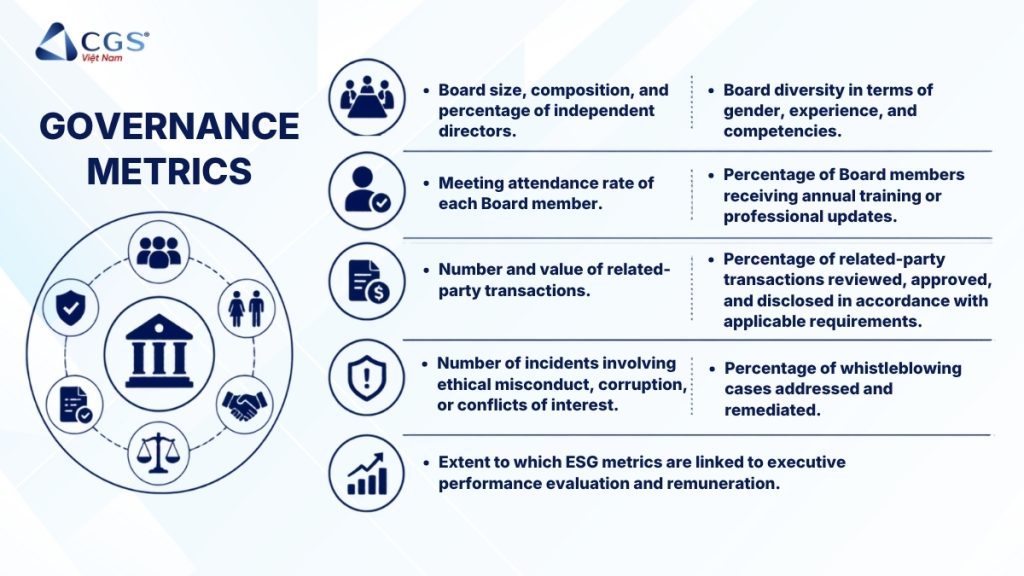
Governance metrics should not merely indicate whether a company “has” a particular policy or committee in place. They should combine measures of structure, activities, and outcomes. For example, in addition to having a whistleblowing mechanism, a company should consider tracking the number of reports received, case resolution times, and the percentage of remedial actions completed.
A single metric is not sufficient to assess ESG performance. Metrics should be interpreted in the context of the data boundary, reporting period, calculation methodology, baseline, and reasons for changes. For example, total emissions may increase as production expands, while emissions intensity per unit of product may decline.
How should companies select ESG metrics?
The selection of ESG metrics should be based on several key considerations:
- (*) Mandatory requirements: Companies should identify metrics that must be collected under applicable laws and regulations or the reporting standards they have chosen to apply.
- Stakeholder requirements: Companies should consider requirements from parent companies, customers, lenders, and other relevant stakeholders.
- Intended use: Is the metric intended for internal management, regulatory compliance, external reporting, or communication with investors and customers?
- Materiality: Metrics should relate to the company’s significant impacts on people and the environment and/or ESG-related risks and opportunities that could affect the company’s prospects.
- Industry characteristics: Energy, chemical, and construction companies may prioritise emissions, waste, and occupational safety. For banks or technology companies, data security, financial inclusion, and business ethics may be more significant.
- Measurability: Each metric should have a clear definition, calculation formula, unit of measurement, boundary, data source, collection frequency, and responsible function.
- Comparability: Companies should maintain consistent calculation methodologies and combine absolute figures with intensity metrics to reflect both the scale of impacts and operational efficiency.
- Manageability: Material metrics should be linked to a baseline, targets, timelines, accountable owners, and reporting mechanisms to management or the Board.
(*) A note on mandatory requirements under selected reporting standards Depending on how a company applies its selected reporting standards, different mandatory disclosure requirements may apply, including requirements relating to ESG metrics. For example, under the GRI Standards:
|
Standards and frameworks that support the development of ESG metrics
Companies may use a combination of ESG standards and reference frameworks depending on their reporting objectives:
- GRI Standards: Focus on an organisation’s most significant impacts on the economy, environment, and people.
- IFRS S1 and IFRS S2: Focus on sustainability-related risks and opportunities that could affect an entity’s cash flows, access to finance, cost of capital, and prospects. IFRS S2 specifically addresses climate-related disclosures.
- SASB Standards: Provide industry-specific disclosure topics and metrics. When applying IFRS S1, companies are required to consider the applicability of SASB disclosure topics and associated metrics when identifying industry-based information.
- GHG Protocol: Provides methodologies for identifying, calculating, and reporting Scope 1, Scope 2, and Scope 3 greenhouse gas emissions.
- ESRS: Apply a double materiality approach, considering both the company’s impacts on people and the environment and the financial effects of sustainability matters on the company.
- TNFD: Supports companies in assessing and disclosing nature-related dependencies, impacts, risks, and opportunities.
The United Nations Sustainable Development Goals (SDGs) can help companies align their ESG strategies with broader sustainable development objectives, but they do not replace measurement and disclosure standards.
Common mistakes when developing ESG metrics
Companies should be aware of several common mistakes that may undermine the relevance, measurability, and effectiveness of their ESG metrics:
- Copying metrics from other companies without conducting a materiality assessment.
- Selecting only data that are easy to collect or show positive performance.
- Developing too many metrics without establishing priorities.
- Failing to clearly define calculation formulas, boundaries, and data sources.
- Changing calculation methodologies between reporting periods without explanation.
- Setting targets without a baseline, timeframe, or implementation roadmap.
- Focusing on reporting presentation before establishing appropriate data quality controls.
- Tracking activity metrics without assessing actual outcomes or impacts.
- Using the same metric for multiple purposes without adjusting its scope or measurement methodology.
Where should companies start?
Companies do not necessarily need to establish a complex ESG measurement system from the outset. A practical starting point is to assess the current state, identify material sustainability matters, and select a core set of metrics that can be measured reliably.
At an early stage, a company may select a manageable set of metrics – for example, approximately 15–30 metrics, depending on its industry, size, disclosure requirements, and data maturity. This is a practical suggestion rather than a standard number applicable to all companies.
Companies should clearly define each metric and its data owner, pilot data collection across selected business units, and then progressively expand the scope. As the system matures, ESG metrics should be integrated into risk management, planning, budgeting, performance evaluation, and Board reporting.
CGS Vietnam supports companies in developing ESG metrics
CGS Vietnam supports companies in assessing their current ESG practices, identifying material sustainability matters, developing ESG strategies and metrics, and establishing ESG data governance processes. We also support the preparation of annual reports, sustainability reports, and integrated reports in accordance with relevant standards and frameworks.
A good set of ESG metrics is not the one with the greatest number of indicators. It is one that helps a company identify the right issues, make better-informed decisions, and track progress toward its sustainability commitments.
—————
References:
- Global Reporting Initiative, GRI Standards.
- IFRS Foundation, IFRS Sustainability Disclosure Standards.
- IFRS Foundation, SASB Standards.
- GHG Protocol, Standards and Guidance.
- OECD, G20/OECD Principles of Corporate Governance 2023.
- European Commission, European Sustainability Reporting Standards.
- Taskforce on Nature-related Financial Disclosures, TNFD Recommendations.
- Ministry of Finance of Vietnam, Circular No. 96/2020/TT-BTC.
About CGS Vietnam
CGS Vietnam Consulting Joint Stock Company provides specialized advisory services in Corporate Governance, Sustainability (ESG), Risk Management, and Internal Audit. Backed by a team of experienced professionals with deep expertise in international best practices, CGS Vietnam partners with businesses to strengthen corporate governance, enhance management capabilities, meet investor expectations, and achieve long-term sustainable growth.
Contact CGS Vietnam:
Hotline: (+84) 363 581 520 | Email: [email protected] | Website: https://cgsvietnam.com/
LinkedIn: https://www.linkedin.com/company/cgs-vietnam | Facebook: https://www.facebook.com/CGSVietnamCompany/